
Rubber can be formed into components by several processes, including extrusion, calendaring, coating onto fabric and moulding. Harboro’s knowledge and expertise is broad and can offer components across the full range of processes. Harboro’s key area of specialism is moulding, operating a wide variety of high tech machinery. We utilise the full range of moulding techniques from compression moulding to cold runner fully automated injection moulding.
The choice of moulding method will depend upon factors such as the required material, tolerances, finish desired, the number of components, and should be discussed in detail during the initial design review.

This is a forming process in which a piece of uncured rubber with the correct geometry and volume is placed into a heated mould. The mould closes under controlled pressure and speed; multiple movements and closure cycles may be used to displace air and fill the cavity before curing begins. The rubber gains heat by conduction from the mould surfaces and “cures”.
When the rubber has had sufficient time to cure, the mould can be opened, and the part removed. Compression moulding is a relatively simple process and is often used for components required in mid to low quantities. Mould costs are generally lower than transfer or injection. Parts moulded by this method will always have some flash because the mould surfaces are held apart by the overspill. Depending on the product, you may need to remove this flash.
Harboro’s range of machines, including vacuum chambers, is from 1 to 500 tons and can accommodate micro to very large thick-section components.
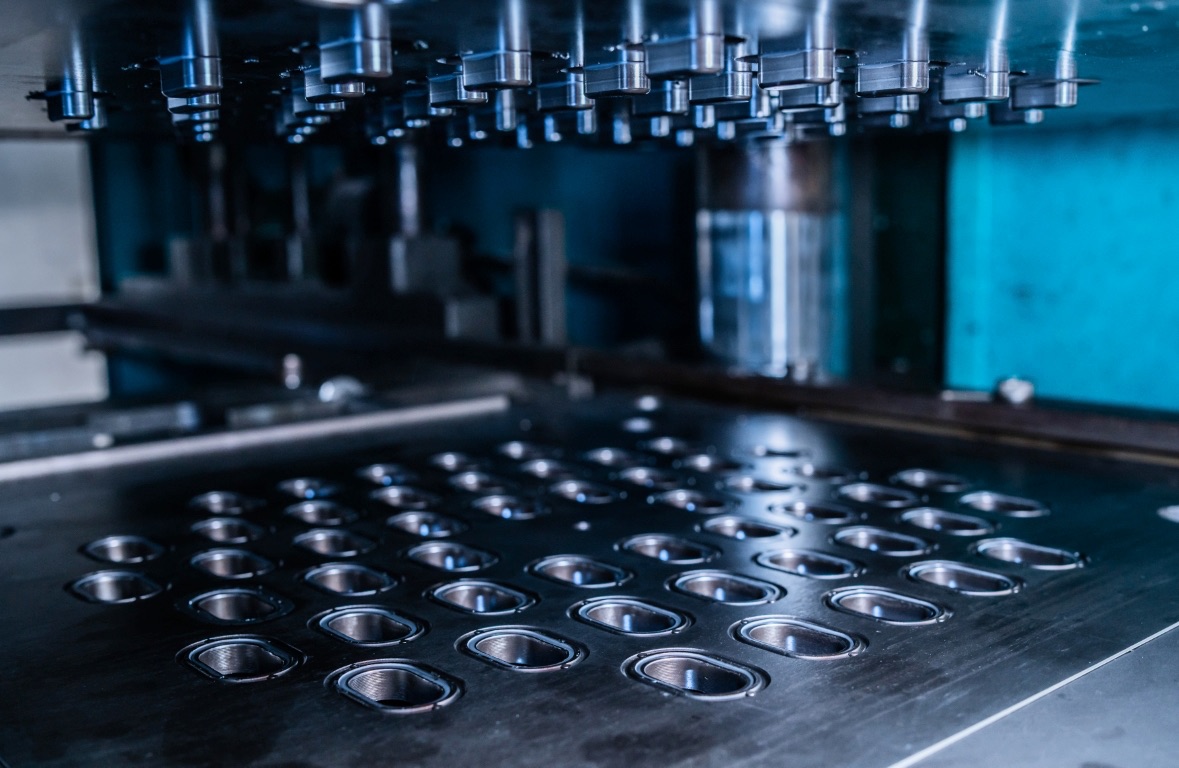
The heated mould is closed in a press, and a hydraulic cylinder injects the rubber through a feed gate into the cavity. The cylinder can be incorporated into the press or, in some cases, into the mould. Provision must be made for air to escape from the cavity as the rubber enters, and the feeding method chosen to suit the operational requirements of the part.
This moulding method can produce high-precision parts in moderate quantities without high tooling costs. In the simplest case, the mould can be the same as a compression mould with the addition of a cavity feed gate. Maximum weight and number of cavities are limited by the transfer cylinder capacity and clamp pressure.
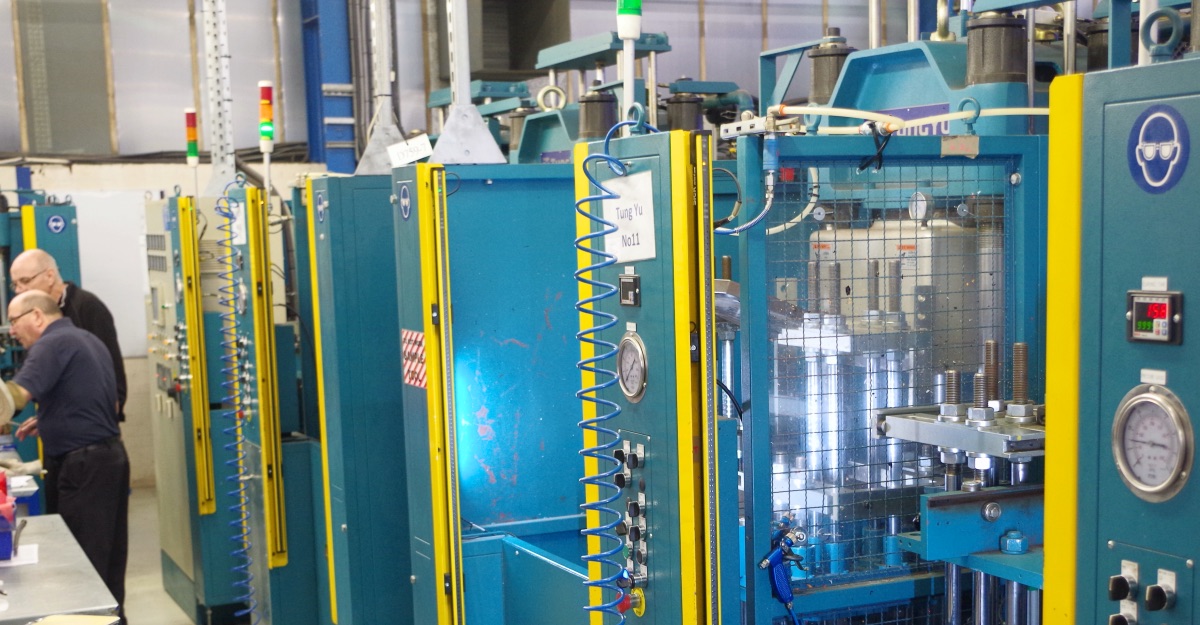
Injection moulding, including variations in material presentation, is probably the most widely used for high-volume manufacture. Controlled chamber or Cold runner systems help eliminate waste and improve the moulded product. Rapid cycle times with minimal/no flash can be achieved, enabling full automation and low unit-cost supply. Most Natural and synthetic rubbers can be injection moulded, and each enquiry is evaluated by the technical team to select the most appropriate manufacturing method. With machines ranging from 1 ton to 500 tons, the annual part volume does not need to justify the injection moulding approach. Low-volume parts can be injection moulded without concern.
